

How Expensive is South Korea? What are monthly expenses?.
Hi Everyone, I often get this question so better to write a detail post about it along with short explaining youtube video.
Now a days more and more Korean companies are opening their doors to foreigners, Ever increasing number of engineers and expats are looking forward to start new phase of their career in South Korea. Considering Seoul is 8th Most expensive city to live, it’s not cheap place to live.
But if plan well then it’s definitely possible to live and enjoy your life to fullest, In this post I am trying to cover most aspect that make up cost of living in Korea focusing mainly on Engineers and white collar jobs, However even if you are not engineer or professional it will help in you understanding cost of living in Korea.
This post cover standard living life with average expenses for family of 4 I.e Husband, wife and 2 daughters. It will cover some additional elements such as school/kindergarten fee in Seoul and surrounding areas, Note this cost may slightly differ if choose to live in other parts of South Korea such as Busan, mostly it will be on cheaper side than Seoul. Biggest difference being Rent and food while other expenses such as phone, internet, seasonal fruits and vegetables going to remains same as Seoul.
Content
- Minimum Wages
- Cost of Living in Seoul and surrounding area.
- Rent
- Internet/Telephone
- Public Transport/Car Expense
- Health Insurance
- Groceries
- Other costs
- Conclusion
Minimum wages
At the time of writing this blog on 15 August 2019, the Ministry of Employment and Labor (‘MOEL’) announced the minimum wage for 2020 as KRW 8,590 (approximately USD 7) per hour, This makes the daily and monthly minimum wage 68,720KRW (assuming an 8-hour workday) and 1,443,120KRW (21 workdays per month) respectively. That is $57 daily and $1200 monthly at the time of writing, Keeping in mind that the minimum wage is about $1200 per month, let’s get into the cost of living in Seoul.
Cost of Living in Seoul and Surrounding areas
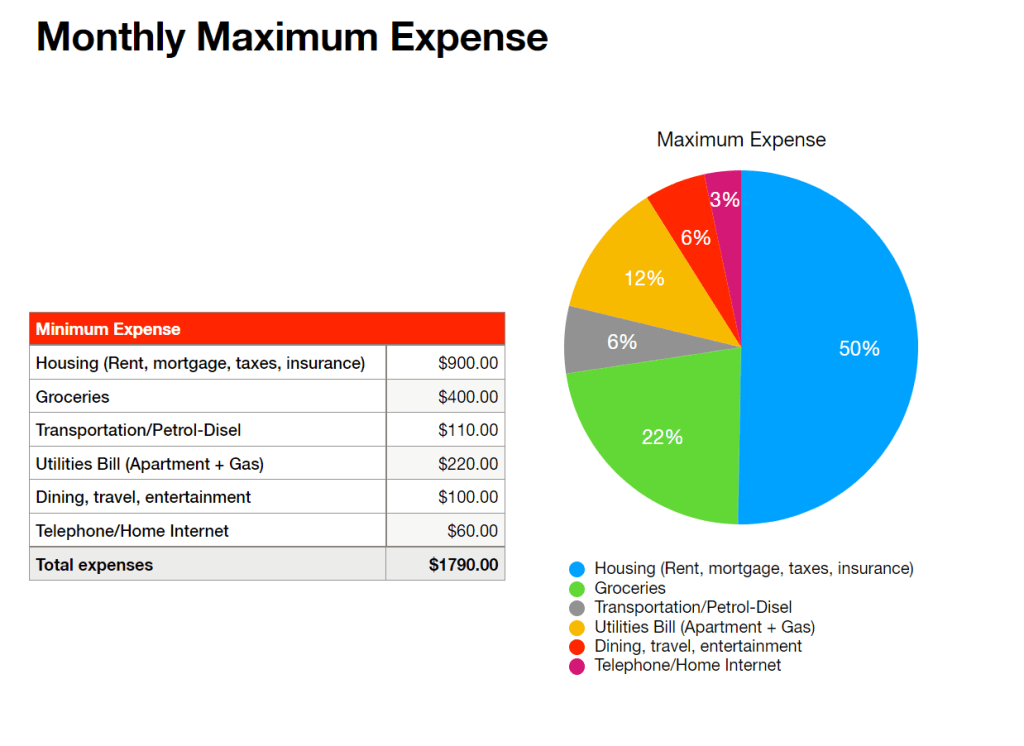
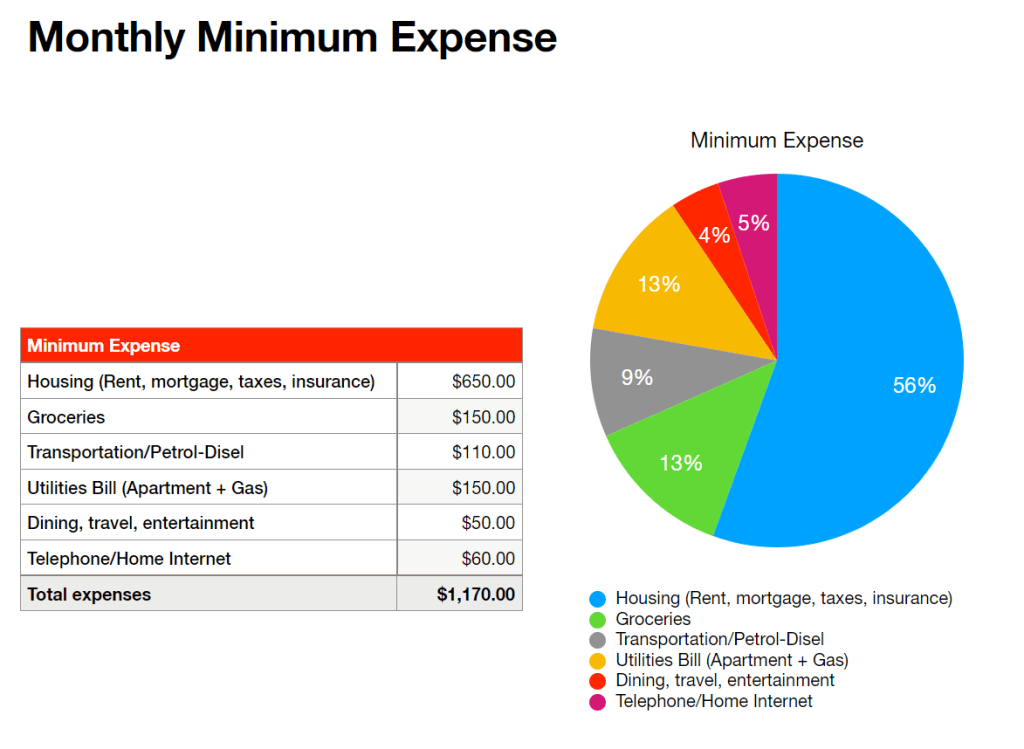
Piechart above shows minimum and maximum amount on average one family has to pay per month while living in Seoul and near by areas like Suwon, this breakup assumes you are living in apartment as a family so either husband-wife or husband-wife and kids, Your life style includes eating 1-2 times a month outside with moderate shopping involved.
Rent
No doubt but rent is the largest amount anyone has to pay while staying in Korea, especially if you are planning to live with family whether it’s just husband and wife or husband-wife and kids, Apartment has 2 payment systems in Korea, as foreigner unless you have large sum of money with you most probably you will end up choosing Wolse based rental system that involves relatively small amount of money for deposit followed by monthly rental on regular basis, Following are two systems in Korea
Jeonse (Key Money Deposit)
Jeonse, or the key money deposit, is a housing rental system specific to Korea.
- Instead of paying monthly rent to a landlord, a large lump sum payment around (200K USD or 300K USD) is deposited into the landlord’s bank account for the duration of the contract.
- By law, Jeonse contracts are signed for two years. At the end of the contract, the complete deposited amount is returned to the renter, assuming no damage is done to property or premises.
- Some landlords prefer this method because they can collect interest from the amount deposited in the bank. Another reason why some landlords may prefer the Jeonse method is simply because they have purchased the property with Jeonse contracts themselves.
- Some may not like the key money deposit method since depositing a large sum of money comes with risks, not to mention the difficulty of trying to come up with a large sum of money all at once. However, this method is the most advantageous for tenants since the full deposited sum is returned at the end of the contract. When looking to rent on a key money deposit method, the first step you must take is to check that there are no unpaid loans. It is imperative that you check the building’s register before you sign.
Wolse (Monthly Payment + Deposit)
Wolse requires the renter to deposit a fixed sum to the landlord after which monthly rent is to be paid on a specified date each month.
- The amount of the security deposit for wolse is lower than that for jeonse. The amounts of the security deposit and monthly rent are negotiable.
- The deposit sum can be increased in order to lower the monthly rental charge.
- The lessee should pay monthly utility charges (electricity, water, gas, phone, Internet, and TV reception).
If you are engineer or in white collar job you are going to fit in Wolse category for rental system, In Wolses deposit may start from 5,000,000 KRW (close to $ 5000 USD) to 25,000,000 ($25000 USD), so more deposit you put less rent you have to pay, deposit is expected to be increase with increase in apartment size. For deposit of 25,000,000 KRW you may end up paying rent around 650,000 KRW to 900,000 KRW depending on location and type of apartment. Just make sure you company or you are prepared for deposit amount when you arrive in Korea, again this initial deposit amount is returned completely while leaving apartment, only assumption here is you didn’t damage property or premises.
Another sub item which you need to pay independently for apartment is maintaince fee that covers your electricity bill + garbage disposal cost + Common area electricity + some fee for future work (which is refundable), usually depending on size of apartment it may start from 100,000 KRW and go upto 200,000. Also gas bill comes separate, Most of the Korean apartment uses traditional heating system called Ondol (Floor heating based) this can increase cost during winter. Gas bill can start from less than 10,000 KRW and can go uptown 100,000-150,000 KRW in winter.
Internet/Telephone
No doubt that connectivity at home and in daily life is more important these days, Though Korea has highest internet speed in the world it also has one of the highest price to data ratio mean you have to pay a lot for accessing certain GB of data per month especially on LTE, If you go with 2 years contract with anyone of the major career such as SK Telecom, KT or LGU+ you will get a deal such as home internet + Telephone plan for month slightly less than total individual amount. Most of the companies reimburse telephone bill if you are at customer location or interacting with company employee a lot on phone through email or any means of communication. On average monthly home internet can come around 20,000 KRW to 30,000 KRW with unlimited data speed + modem rental covered, while LTE based cell phone plan may start from 40,000 KRW to 70,000 KRW with/without device fee. I will write another blog dedicated to cell phone plan, how and where to choose them as my experience.
Public Transport/Car Expense
In general normal public transport system is very well integrated in Seoul and surrounding areas, Subway, Taxi and buses are connected via transit card system called T-Money, so if you hope on from bus to subway or taxi vice versa you will get discount also journey would be treated as one for fare calculation. Depending on where you home is and where is you job location you can calculate distance and fare using Apps like Naver Map or Kakao Map, There are multiple ways to save money even on public transport system like if your journey involves only usage of Subway you can subscribe to monthly Subway Pass that allows you certain rides like 60 on a monthly basis. Considering even longest possible route and daily commute I don’t think anyone will spend more than 100,000 KRW on public transport
While when it comes to personal car, I recommend buy it only when it’s necessary like you have kids or have some medical condition within family, where public transport can become difficult (Though all subway system are disable friendly especially for blind or wheel chair), used car in Korea are very well maintained and available in lots of price range, Another blog on that topic soon. But once you buy it Petrol/Diesel is quite expensive especially compared with United States or even compared with India. At the time of writing blog when per barrel price of oil was $37.39, Petrol price is 1,359 KRW/Lt and Diesel price is 1,179 KRW/Lt, Depending on average/mileage of you car you may spend around 100,000 KRW per week on your Fuel, with personal vehicle there are additional cost such as Car insurance (once a year) and mandatory car inspection once a 2 year. Roads in Korea are well built unless you are traveling to country side very often, but having said that it reduces maintenance costs of car you need to often change oil filter and oil of the car, that you can do it in normal car repair shop for less than 50,000 KRW.
Health Insurance
Korea has mandatory government health insurance called NHIS (National Health Insurance Service), so your employer will deduct NHIS amount from your salary on monthly basis, Now how much amount gets deducted depends on your salary and which category your visa fits. Detail information is available on following webSite : Korean NHIS details
On average expect to pay in between 150,000 KRW to 300,000 KRW per month, which can contribute to 1,800,000 KRW to 3,000,000 KRW per year for insurance that covers almost 90% of your cost includes medicine also, On top of this for hospitalization for remaining amount your company may provide private health insurance.
Groceries
Groceries are entirely depends on what your ethnicity and where you are from, in our case most of the Indian groceries are available in Korea with some exceptions, For estimation you can check expat-mart.com or similar website to get idea of price, There are multiple places from where you can buy ranging from local vendors upto large stores such as Costco. Details comparison of each type of store will be written in another blog but on an average for family 400,000 KRW worth of groceries are enough to survive for month. If you eat outside and you don’t follow certain food restrictions then you might able to save on groceries and gas bill, most of the Korean friends I know eat outside (Husband at work place, kids in school and wife outside with friends)
Other Costs
Entertainment in life is vital so watching movie, going out with family for lunch/dinner may not cost you a lot in Korea, Since price in Korea always include taxes and there is no tip culture so essentially you will not spend huge amount other than what is mentioned in price list. Children cafe costs is around 10,000 KRW for one child for 2 hrs, A glass of cafe latte may costs 5,000-6,000 KRW in Starbucks (Starbucks is always costly than other cafes), while a simple lunch/dinner may costs around 40,000-50,000 KRW for family of 4. You can estimate around 60,000 – 100,000 KRW per month on expenses like these.
School can be considered as add on costs for families with kids young enough to go to school or kindergarten, In general International schools are expensive in Korea so price for those may go upto 800$-1200$ per child per month, while English kindergarten by costs around 300$-450$ per child per month (there are cheaper options also but you have to careful while choosing them, do your research). Korean kindergarten accepts non-korean citizens and charge around 150$-250$ per month, this fee includes one meal in school, activities such as books/material used for education and some form of books/educational toys child may receive on monthly basis. School fee could be significant portion of expenditure so be considerate while relocating to Korea and try to negogitate your salary appropriately with your employer.
Conclusion
Living in Korea is not as expensive as it’s being portrayed by media or various organization, Most of the entities that conduct market surveys often consider life styles of ultra rich or executives who are migrating to different countries. If you plan your expensive very well then it’s easy to save money in Korea if your in hand salary is more than minimum wage of $1400 then you would be able live comfortably. In my opinion if you accommodation cost is covered by Employee then $2000 per month is more than enough for a married couple of survive in Korea if accommodation is not included then $3000 is more than enough, Only expensive part of Korea is international school and if you are afford to pay that then you won’t find problem to stay in Korea for longer term. Having said that please subscribe to following podcast for updates in future.
.

Next step after Job offer : part 1 – Life Where We Live
Get new content delivered directly to your inbox.
 LifeWhereWeLive